
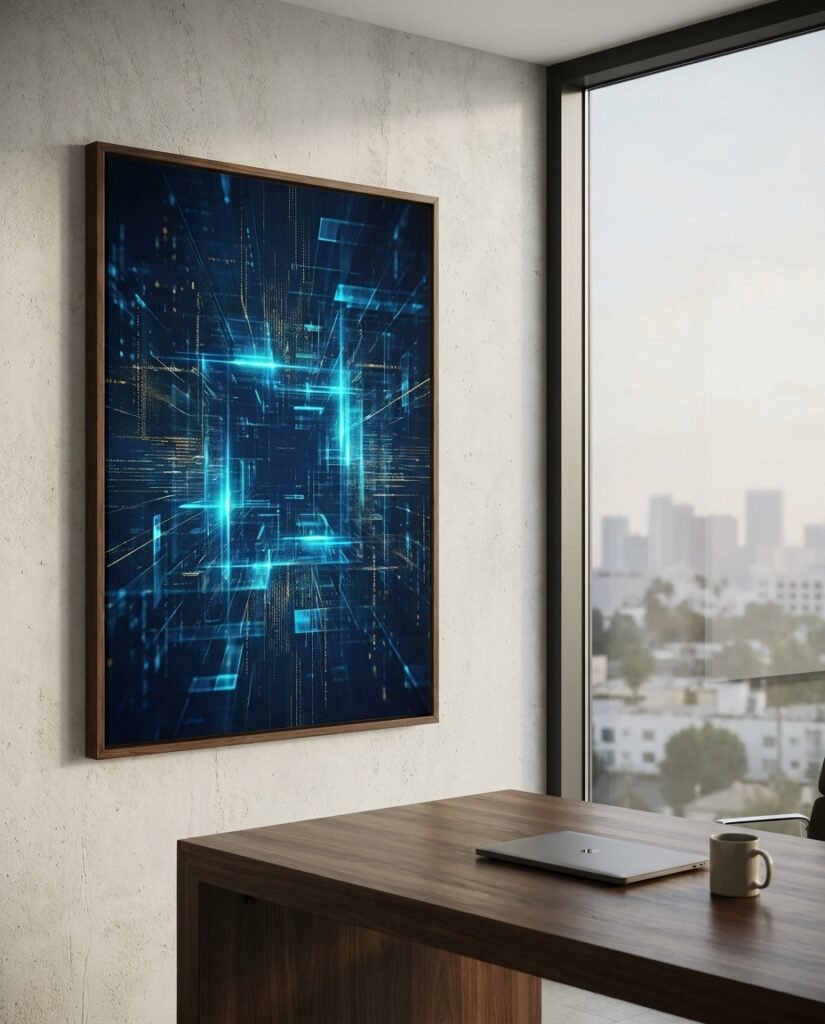
The Currency of Environment
In Silicon Valley, we measure everything. Burn rate, CAC, LTV, ARR. We worship at the altar of the quantifiable. But the most critical metric remains invisible to your dashboard: the cognitive output of your team.
You spend millions on top-tier talent, but you place them in environments that are aesthetically bankrupt. The default startup office art is a sea of whiteboards, branded coffee mugs, and posters with pithy, meaningless slogans. This isn’t a culture; it’s a cliché. And clichés are where deep thinking goes to die.
The space you inhabit is not passive. It is an active participant in every line of code written, every strategy session held, and every billion-dollar idea conceived. To ignore it is strategic malpractice.
Beyond Decoration: The Mandate for Abstract Art Innovation
Let’s be clear. We are not talking about decoration. Decoration is pleasant. It is agreeable. It is also utterly useless for the task at hand: rewiring the brains of brilliant people to see the world differently. This is the role of challenging, intentional abstract art.
Figurative art—a landscape, a portrait—tells you what to think. It presents a conclusion. Abstract art, however, presents a question. It forces the mind to search for patterns, to create connections, to build a narrative from chaos. This is the very definition of innovation. It is a daily, subconscious workout for the precise mental muscles required to disrupt an industry.
Rethinking Tech Company Office Design
The standard approach to tech company office design is fundamentally flawed. It prioritizes open-plan efficiency and quirky perks over the profound psychological impact of the visual environment. It treats walls as dead space waiting for a coat of paint.
This is a failure of imagination.
Your office is a signal. It signals to your team, your investors, and your clients what you value. A sterile environment signals a focus on utility over vision. An environment saturated with deliberate, thought-provoking art signals a commitment to a higher level of thinking. It demonstrates an understanding that the next unprecedented leap won’t be found on a spreadsheet, but in the space between established ideas.
Your office walls are either a tool for innovation or a monument to mediocrity. There is no middle ground.
The Deliberate Choice: Curating for Cognitive Ascent
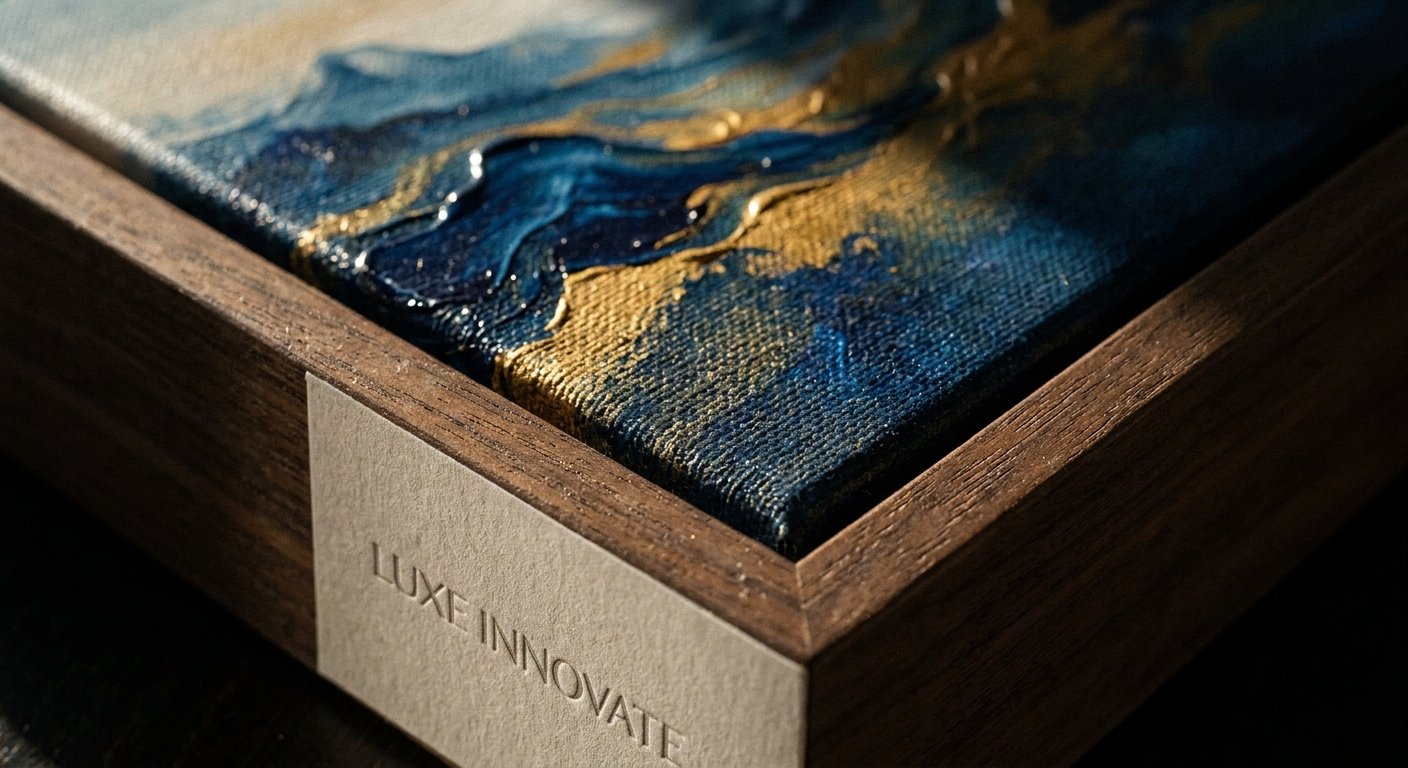
The right piece of art doesn’t just hang on a wall; it anchors a room and commands intellectual attention. It should be a constant, silent invitation to think bigger. This is why the material and presentation are non-negotiable. A flimsy poster signals disposability. A substantial, textured Framed Canvas, however, signals permanence and conviction. The interplay of light on its surface, the depth of its color, the sheer physical presence—it all contributes to an atmosphere of significance.
This is the philosophy behind the Gemini AI-powered collections at Wolf Stack Shop. Each piece is engineered to be a catalyst for the kind of non-linear thinking that defines market leaders. It’s not just creative workspace art; it’s a strategic investment in your team’s cognitive framework.
The New Standard for Silicon Valley Office Decor
The game has changed. While your competitors are still arguing about the best brand of kombucha for the company fridge, the defining startups are curating environments that breed genius. They understand that every square foot of their office is an asset that can be leveraged.
They are building spaces that don’t just facilitate work, but actively provoke the thinking that leads to category-defining breakthroughs. They are transforming their headquarters from a simple place of business into a gallery of intent, where every visual element is aligned with the mission of invention.
The question is no longer whether you can afford to invest in this defining shift. The question is whether you can afford not to.
Position Your Space. Define Your Legacy.
Stop decorating. Start positioning. The Wolf Stack Shop provides the visual assets for companies building the future. This is not an expense. This is an investment in your intellectual capital.