
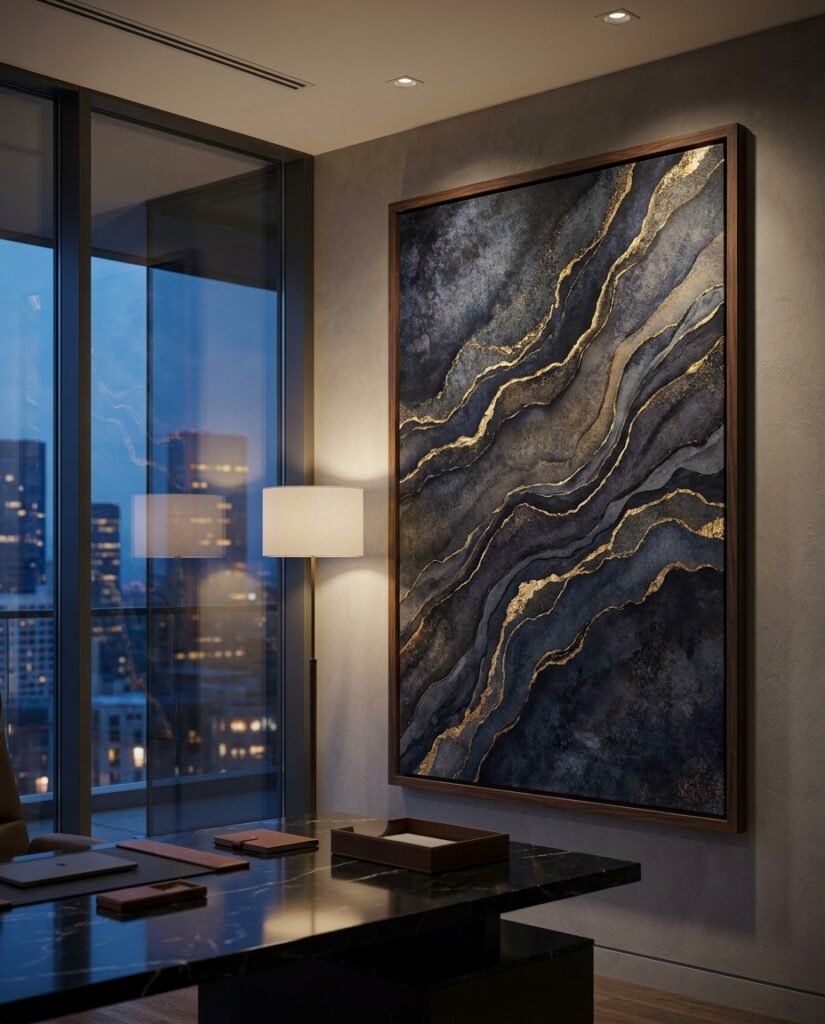
The Neurological Signature of High-End Visual Design
Let’s be clear. The decision to invest in a significant piece of art is not made on a spreadsheet. It’s a neurological event, a subconscious calculation of value that happens in milliseconds. This is the foundation of luxury perception design: the deliberate crafting of visual cues that signal undeniable quality to the most primitive, discerning parts of the human brain.
We are wired to equate complexity, texture, and visual weight with value. It’s an evolutionary shortcut. A smooth, uniform surface is simple to process—and often, simple to produce. A surface with depth, intricate detail, and tangible texture, however, forces the brain to work. It implies a more complex origin, a higher investment of energy and resources. It implies worth.
Most corporate and residential spaces fail this fundamental test. They are visually mute. They are filled with placeholders, with objects that occupy space but communicate nothing. They are a monument to mediocrity, a flatline of visual information that tells clients, partners, and even your own team that ‘good enough’ is the operating standard. This is not a failure of budget; it’s a failure of intent.
Beyond the Pixels: The Primacy of Texture and Materiality
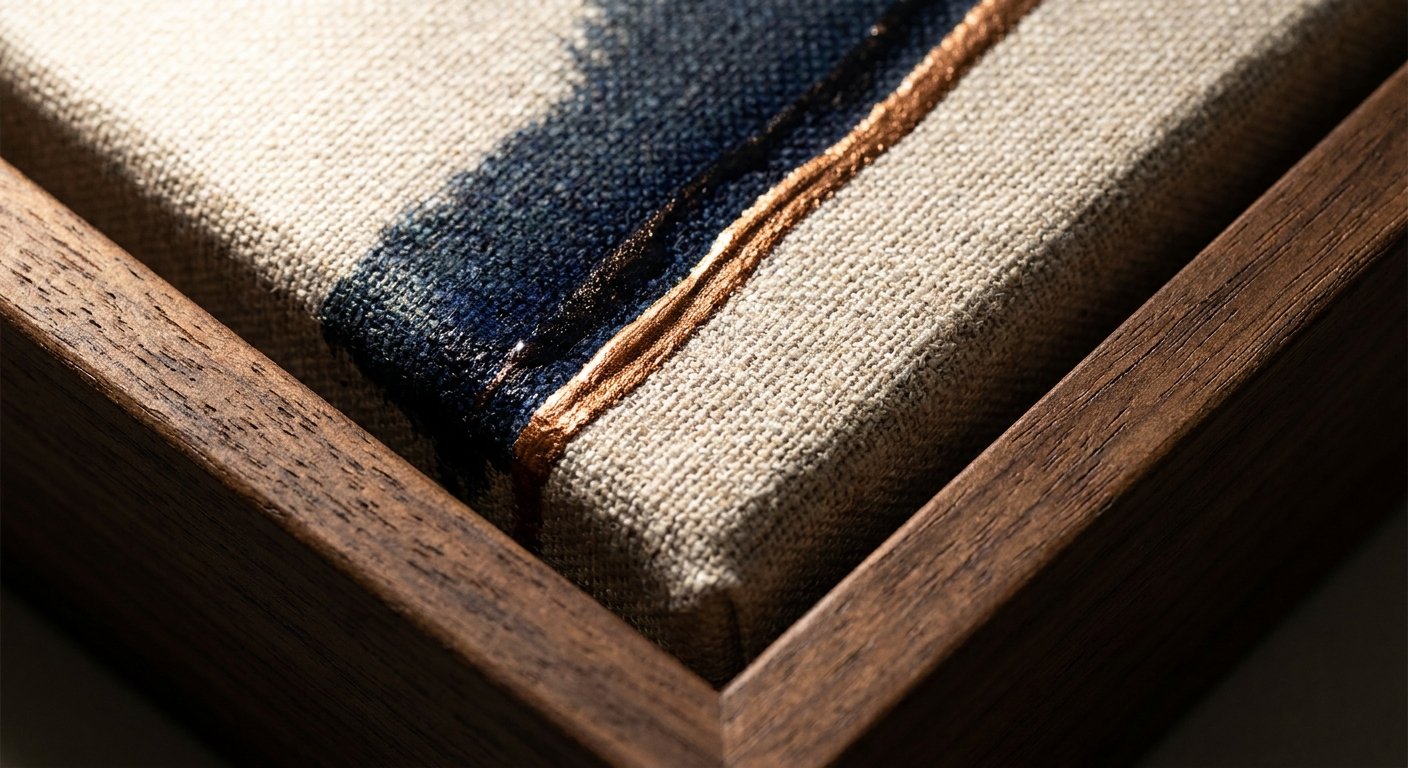
In a world saturated with digital perfection, the true signal of exclusivity has become analog. The flawless, backlit glow of a screen is ubiquitous. It is the default. What has become rare—and therefore valuable—is authentic texture. It’s the subtle interplay of light across a physical surface, the grain of a frame, the weave of a canvas. This is the core of the science of luxury art.
Your eyes are not cameras; they are data collectors for your brain’s threat and opportunity assessment engine. When they register authentic materiality, they send a powerful signal: *This is real. This is substantial. This has weight.* This is a signal that cannot be faked with a high-resolution print on flimsy paper. It’s a tactile promise of quality made from across the room.
The objects you choose to surround yourself with are not passive decorations. They are active participants in every negotiation, every strategic decision, and every first impression that takes place in their presence. They are broadcasting your standards, 24/7.
Luxury isn’t an object; it’s a neurological event. It’s the moment your visual cortex confirms what your ambition already knew.
Decoding Quality Perception Decor: From Theory to Execution
Understanding the theory is one thing. Executing it is another. The difference between an environment that feels expensive and one that *is* expensive lies in the coherence of its visual language. It’s about making deliberate choices that reinforce a single, powerful message of quality and authority.
Mediocre spaces are a collage of indecision. High-performance spaces are a curated thesis. Every element works in intentional alignment to build a specific perception. The art you select is the anchor of this thesis. It sets the tone and validates the investment in everything around it. It’s the visual keystone that makes the entire structure of your brand, both personal and professional, hold its form.
This is why the conversation must shift from ‘decorating a wall’ to ‘calibrating an environment.’ The former is a cost. The latter is an asset that appreciates, both in value and in influence.
The Three Pillars of Visual Authority
To command a room visually, your art must possess three non-negotiable attributes. The absence of even one collapses the entire structure of perceived value.
- Uncompromising Materiality: The object itself must feel as significant as the image it holds. A powerful piece of AI-generated art, for example, loses all its authority if presented on a flimsy medium. A heavyweight Framed Canvas, with its rich texture and substantial dark wood frame, provides the necessary physical gravitas. It communicates permanence.
- Narrative Depth: The work must invite curiosity. It should feel like it has a story, a point of view. This is the defining shift Gemini AI brings to the table—creating visuals with a sense of history and intent that the human mind is compelled to explore. It’s not just a picture; it’s a conversation starter.
- Intentional Alignment: The piece must feel inevitable in its space. Its scale, color palette, and theme must lock into the room’s architecture and purpose, creating a feedback loop of perceived quality. It shouldn’t just match the furniture; it should challenge and elevate it.
When these three pillars are in place, the art stops being an object and becomes an environment. It changes the way people think, feel, and act within the space. It becomes a tool of influence.
The art in your office, your lobby, or your home is the most honest statement you will ever make about your standards. It speaks when you are not in the room. Make sure it’s saying the right thing. The Wolf Stack Shop was built for leaders who understand that perception is not a soft skill—it is the ultimate strategic advantage.
Your Walls Are Talking. Control the Narrative.
Stop decorating. Start positioning. An environment of uncompromising quality is not an expense—it is the new cost of entry for those who refuse to be ignored. The choice, as always, is yours.